
Your Brain at Work: What Top Experts Want You to Know
Practical rewiring steps for professionals drowning in speed, pressure, and noise.

After attending Day 5 of the Rewiring To Break Free From Self-Limiting Behaviors Summit hosted by the Heart Mind Institute, something remarkable became clear:
Eight leading experts from completely different fields — neuroscience, emotional resilience, memory, productivity, fear, visualization, learning, biohacking — all pointed to the same underlying message.
Not through theory. Not through complicated neuroscience.
But through lived stories, hard-earned insights, and decades of helping people break through their own patterns.
And that message is this:
Most people aren’t stuck because they’re flawed. They’re stuck because they’re patterned — and patterns can be rewired.
This article distills the most important insights I heard with examples grounded in real working life, especially in fast-paced tech environments.
1. Jim Kwik — Identity Shapes Action
Jim Kwik is one of the world’s leading experts on memory, accelerated learning, and brain performance. He has trained CEOs, astronauts, elite athletes, and major companies like Google, Nike, SpaceX, and Harvard.
Jim learned early how damaging labels can be. After a childhood brain injury, he was called “the boy with the broken brain” — and for years, he lived into that identity.

His message was direct:
“Your self-talk becomes your identity. And identity drives behavior.”
Real identities many professionals unconsciously operate from:
“I’m the firefighter — I solve the chaos.”
“I’m the quiet one in meetings.”
“I’m not a strategic thinker.”
“I’m the anxious one.”
“I’m the person who stays late.”
These aren’t truths. They’re practiced beliefs.
Jim’s insight:
If identity is learned, it can be unlearned and upgraded.
2. Dave Asprey — Your Body Reacts Before You Do
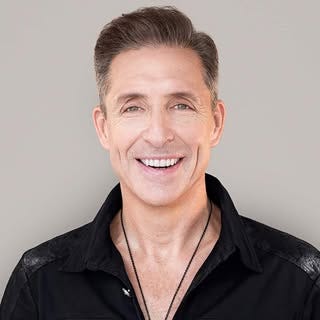
Dave Asprey is widely considered the father of the modern biohacking movement. He founded Bulletproof, authored multiple New York Times bestsellers, and has spent decades studying human performance and the nervous system.
Dave shared something counterintuitive:
“Your body has urges. You don’t have to believe every craving or trigger.”
He described how tension, cravings, restlessness, or impulses hit the body first — and the mind then creates meaning afterward.
Examples from his talk:
A stressed body sends a signal → the mind interprets it as “I’m overwhelmed.”
A sudden craving hits → the mind turns it into “I can’t stay disciplined.”
Fatigue hits → the mind decides “I’m unmotivated.”
These aren’t personal failures.
They are biological reactions the mind misinterprets.
In high-pressure tech driven work environments, this happens constantly.
Dave’s insight:
Your body’s urges are not “you” — and you don’t have to believe every trigger your nervous system produces.
3. Ruth Soukup — Fear Disguises Itself as Everyday Habits
Ruth Soukup is a bestselling author and founder of Living Well Spending Less®, known for her groundbreaking work on fear, courage, and self-sabotage. Her research-backed Fear Archetypes framework has reached millions.

Ruth shared one of the summit’s clearest truths:
Fear rarely feels like fear. It hides inside everyday behaviors.
She described fear disguising itself as:
Procrastination: Waiting because the fear of “not good enough” is louder than the task.
Perfectionism: Trying to control outcomes so criticism becomes impossible.
Overthinking: Replaying every angle to avoid uncertainty.
People-pleasing: Saying yes to avoid disapproval.
Avoidance: Not deciding, not replying, not starting.
These are not character defects. They are protection mechanisms.
Fear keeps us safe — even when safety limits growth.
Ruth’s insight:
Fear often hides inside normal behaviors — and once you recognize the pattern, it becomes possible to choose differently.
4. David Allen — Overload Creates Anxiety and Self-Doubt
David Allen is the creator of the Getting Things Done® methodology — one of the most influential productivity systems in the world. His work has reshaped how leaders, organizations, and Fortune 500 companies manage work.
David explained how unprocessed tasks create what he calls “open loops.”
“You don’t want 2,000 unprocessed emails in your head when life hits you.”
Overload leads to:
reactive behavior
difficulty prioritizing
emotional overwhelm
constant mental noise
In tech work, these loops multiply:
Slack notifications
Shifting priorities
Half-done tasks
Dependencies
Meetings stacked on meetings
Unclear responsibilities
Overload isn’t personal weakness.
It’s a capacity issue — one your brain was never designed to handle alone.
David’s insight: A clear mind creates calm action — but cluttered, unprocessed commitments generate overwhelm and emotional strain.
5. John Assaraf — Commitment Rewires the Brain
John Assaraf is a leading researcher in behavioral neuroscience and brain-based habit change. He has built multiple multimillion-dollar companies and helped thousands rewire limiting beliefs using evidence-based methods.
John shared a turning point from his youth: being asked
“Are you interested, or are you committed?”
The difference:
Interested → works when it’s easy
Committed → works even when fear is present
When your decision changes, your actions follow — and your brain updates.
John’s insight: Commitment activates change — it forces the brain to build new patterns that interest alone never creates.
6. Natalie Ledwell — Childhood Beliefs Shape Adult Patterns
Natalie Ledwell is co-founder of Mind Movies and a globally recognized teacher of visualization, emotional healing, and identity transformation. She has guided millions through inner belief work and subconscious rewiring.
Natalie shared how she discovered her adult financial stress, money blocks, and conflict avoidance all came from childhood experiences.
“All these behaviors I had were tied to beliefs I adopted as a kid.”
Examples she gave:
✔ Growing up around financial stress → believing success creates conflict
✔ Watching parents argue → fearing money conversations
✔ Wanting to be liked → people-pleasing in adulthood
These early patterns run deep and reappear at work:
avoiding feedback
avoiding conflict
underestimating oneself
shrinking to stay “safe”
Natalie’s insight: Many adult behaviors are echoes of childhood beliefs — and awareness is the first step to releasing them.
7. Paul Scheele, PhD — Real Change Happens Below Awareness
Dr. Paul Scheele is a pioneer in whole-brain learning, accelerated learning, and subconscious transformation. His work integrates neuroscience, NLP, and hypnosis to help people dissolve limiting mental patterns.
Paul explained how the conscious mind processes only a tiny fraction of experience — while the nonconscious runs most behavior automatically.
He described how people unintentionally hypnotize themselves with beliefs like:
“I can’t speak in public.”
“I’m not creative.”
“I can’t lead.”
He calls these “trances”—habits of thought so deeply practiced they feel like personality.
A concrete example of this from the summit:
The engineer who has told themselves “I’m bad at presenting” so many times that their body tenses up the moment they’re asked to demo their work.
Not a flaw. A practiced trance — one that can be unlearned.
Paul’s insight: Most limitations are self-hypnotic trances — and waking up from them begins with understanding how the deeper mind works.
8. Christine Carter, PhD — Rest, Joy, and Purpose Strengthen Performance
Dr. Christine Carter is a sociologist, senior fellow at UC Berkeley’s Greater Good Science Center, and bestselling author whose research on joy, stress resilience, and thriving is used by leaders and educators worldwide.
Christine described her own experience with burnout — including a moment of deep exhaustion many high performers quietly relate to.
Before sharing the memorable line, Christine explained the kind of exhaustion she had reached — a level where she no longer trusted herself to choose rest on her own.
Then her stark admission:
“I had hospital fantasies. I wanted someone to force me to rest.”
Her research demonstrates:
Purpose calms the nervous system
Joy increases emotional resilience
Rest improves clarity and decision-making
“When I’m in purpose, outcome doesn’t matter anymore.”
Meaning creates spaciousness.
Spaciousness creates clarity.
Clarity creates confidence.
Christine’s insight: Purpose reduces pressure, and rest creates clarity — overwork is often a belief, not a requirement.
The 7 Unified Pattern Across All Eight Sessions
Despite different disciplines, every expert described the same mental architecture:
1. Limiting beliefs are protection strategies — not personal failures.
2. Identity automatically shapes how you behave.
3. Fear hides inside normal work habits.
4. Overload amplifies emotional reactions.
5. Childhood patterns shape adult responses.
6. Real change works below conscious awareness.
7. Purpose, joy, and rest support peak performance.
Eight voices — one shared truth.
Why This Matters for Professionals in Fast Paced Work Environments
Fast paced work environments activate all the patterns described above:
constant context switching
Slack interruptions
unclear requirements
shifting priorities
high expectations
rapid decision cycles
emotional labor
pressure to stay “always on”
These conditions don’t create weakness.
They activate old patterns faster.
Understanding your mind becomes a competitive advantage — not just for performance, but for clarity, calm, and leadership presence.
A Framework to Start Rewiring Patterns
Every step is directly grounded in the insights of the world class experts from the summit sessions.
1. Notice the belief
Recommended by Jim Kwik.
Example: “I always freeze in meetings.”
2. Feel your body’s response
Recommended by Dave Asprey.
Example: tension → mind says “I’m overwhelmed.”
3. Soothe the nervous system
Recommended by all experts across the entire summit.
Example: slow exhale, grounding feet, short walk.
4. Ask: “What pattern is this?”
Recommended by Ruth Soukup & John Assaraf.
Example: “This isn’t laziness — it’s fear of judgment.”
5. Visualize a new response
Recommended by Natalie Ledwell & Paul Scheele.
Example: imagine calmly explaining your idea in the meeting.
6. Take one small action
Recommended by Christine Carter on sustainable change).
Example: send the message, book the conversation, share the draft.
Small actions shift identity.
Shifted identity shifts action.
Reflection Questions
Where does fear hide in my daily habits?
Which identity am I acting from at work?
What pattern shows up when I’m under pressure?
Which belief or behavior do I want to rewire first?
A Practical Next Step
Understanding these eight expert insights is powerful. Living them while your workday moves at full speed is the real challenge. Overload, fear loops, and old patterns hit before awareness, pulling you back into reactions you didn’t choose.
That’s why I created the Rapid Reset Toolkit — four fast (less than 1 Minute), science-backed protocols built for people who work under pressure and need clarity now.
Use them between meetings, during Slack chaos, or whenever your system tilts into overwhelm.
If it feels right, grab it here
Final Message
If these eight experts agree on anything, it’s this:
You are not broken. You are patterned — and patterns can be rewired.
Clarity comes from awareness.
Confidence grows from compassion.
Change begins in the small moments when you choose differently.
Your mind is far more capable, adaptable, and resilient than you’ve been led to believe.
One small step - every single day :-)
Very well written and insightful.